The knowledge you approve is the only thing it says.
Q&A entries with clear autonomy classes, documents with semantic search, time-limited entries that expire on schedule — and a gap report built from what real customers actually asked.
Answers with an autonomy class
Each entry declares what the agent may do: answer autonomously, open a ticket, or transfer to a human. Sensitive topics never get improvised.
Documents, searched by meaning
Price lists, policies and manuals become searchable knowledge — retrieved by meaning, not keyword luck, and cited in the source log when used.
Facts with an expiry date
Today's availability, this week's offer — dynamic entries expire on schedule. A lapsed fact makes the agent say it can't confirm, never serve stale truth.
From the console
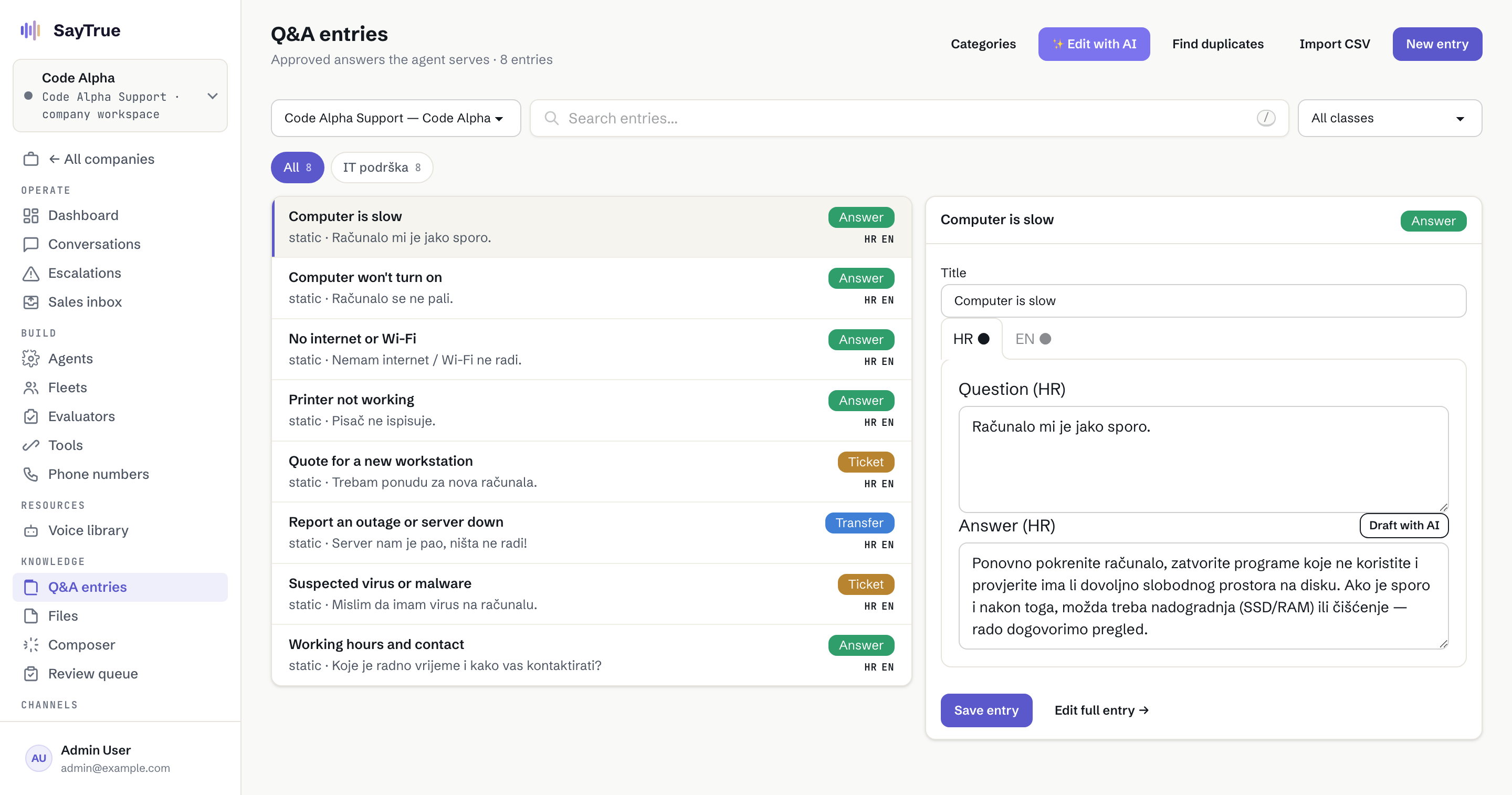
How the base gets built
- Start from your websiteThe builder drafts entries from your public pages; your team approves, edits or discards each one.
- Add what only you knowHouse rules, exceptions, seasonal detail — written as Q&A entries in your languages.
- Connect the moving partsAvailability and statuses arrive through the API as dynamic entries with expiry, or live through connectors.
- Let the gaps guide youEvery question without a grounded answer is logged. The gap report tells you exactly what to write next.
Questions buyers actually ask
How much work is it to fill the knowledge base?
Less than it sounds: the builder drafts entries from your website, imports handle existing FAQs, and the gap report then prioritizes what's actually missing. Clients typically start narrow — the twenty questions that make up most volume — and grow from real demand.
Who maintains it after launch?
Your staff, in a console built for non-technical people — edit an entry, and every channel answers the new way immediately. No tickets to us, no code, no waiting.
What happens to questions it can't answer?
The agent refuses to guess, hands over or records a ticket, and the question lands in the gap report with its frequency. You write the entry once; the next caller gets the answer.
Can knowledge be wrong on purpose — like an old price?
That's what expiry is for. Time-sensitive entries lapse on schedule, and a lapsed entry makes the agent say it cannot confirm rather than serve the old fact. Permanent entries change the moment your team edits them.
Answers your customers can trust.
Grounded in your knowledge, honest about its limits, and handed to your team the moment it should be.