Solutions

Your front desk answers the same call forty times a day.

Working hours, preparation for examinations, referrals, parking, prices — SayTrue answers what your staff repeats, and routes what needs a nurse to a nurse.

Clinic reception AI

The administrative calls, absorbed

Hours, locations, doctors' schedules, price lists, insurance basics — answered from approved entries while the desk handles patients in the room.

Appointment requests

Scheduling requests captured cleanly

The agent records who, what and when as a structured request for your scheduling staff — or transfers live during working hours.

Examination prep

Fasting, water, medications — stated exactly

Preparation instructions answered word-for-word from your approved protocols; anything beyond them is refused and routed to staff.

After-hours triage

Nights and weekends, honestly handled

Out of hours the agent says what's open, records non-urgent requests, and states your emergency guidance exactly as you wrote it.

The story

The morning rush split into answers and clinical questions.

A polyclinic opened each week to a line of callers asking where to park, how to prepare for an examination and which documents to bring. Those administrative calls sat beside symptoms and medication questions that only clinical staff should handle.

The clinic approved its practical instructions word for word and classified clinical questions for handover. SayTrue answers the administrative layer, captures appointment requests for scheduling staff, and routes anything resembling medical advice without attempting to diagnose or choose urgency.

Every administrative answer remains tied to the clinic's approved wording. The scheduling team receives the requested service, preferred time and contact in one place, while clinical uncertainty remains visible as a handover. That boundary can be tested before calls are allowed onto the live number.
How the clinic sets it up

  1. Separate administration from medicineLocations, prices and preparation instructions are answerable; symptoms and treatment remain human.
  2. Copy approved protocols exactlyPreparation and emergency guidance enter as reviewed text with no generated additions.
  3. Define request destinationsScheduling, billing and clinical questions collect different details and reach the right team.
  4. Test the refusal boundaryUse a preparation question followed by a symptom question and inspect both outcomes.

A clinic's useful knowledge base is explicit about what the agent must not answer.

Question The agent answers Autonomy
May I drink water before the examination? Reads the approved preparation instruction for that examination. answers alone
Which documents should I bring? Lists the referral, identification and prior records named by the clinic. answers alone
I need an appointment next week. Captures service, preferred period and contact for scheduling staff to confirm. opens a ticket
Should I stop taking my medication? Refuses to advise and routes the exact question to clinical staff. hands to a human
Where should I go in an emergency? States the clinic's approved emergency guidance verbatim. answers alone
EXAMPLE KB Demo data (Code Alpha) · Illustrative scenario
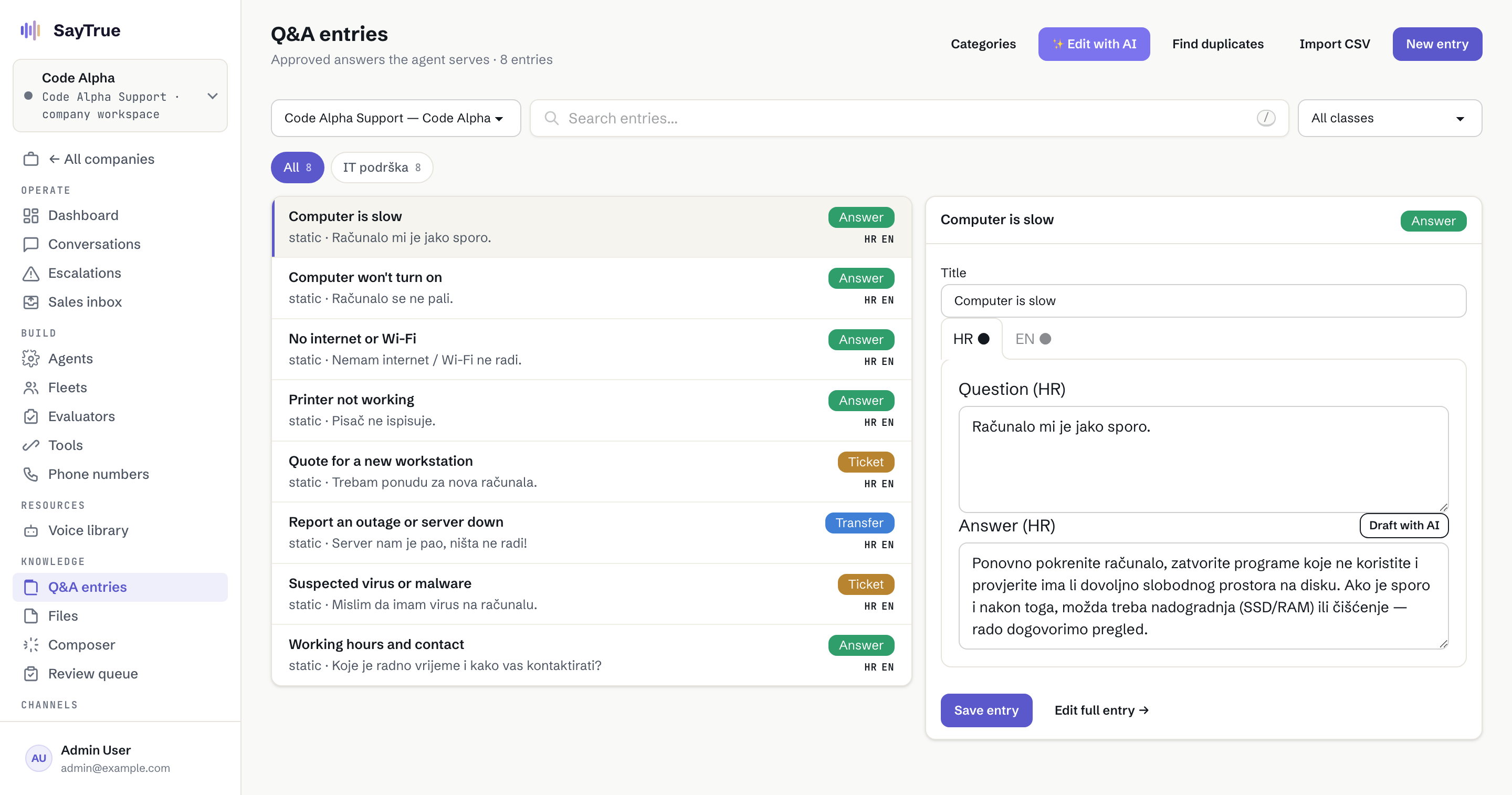
Approved clinic preparation entries in the SayTrue knowledge base
SCREEN 01 Administrative answers are reviewed before callers hear them. Demo data (Code Alpha) · Illustrative scenario
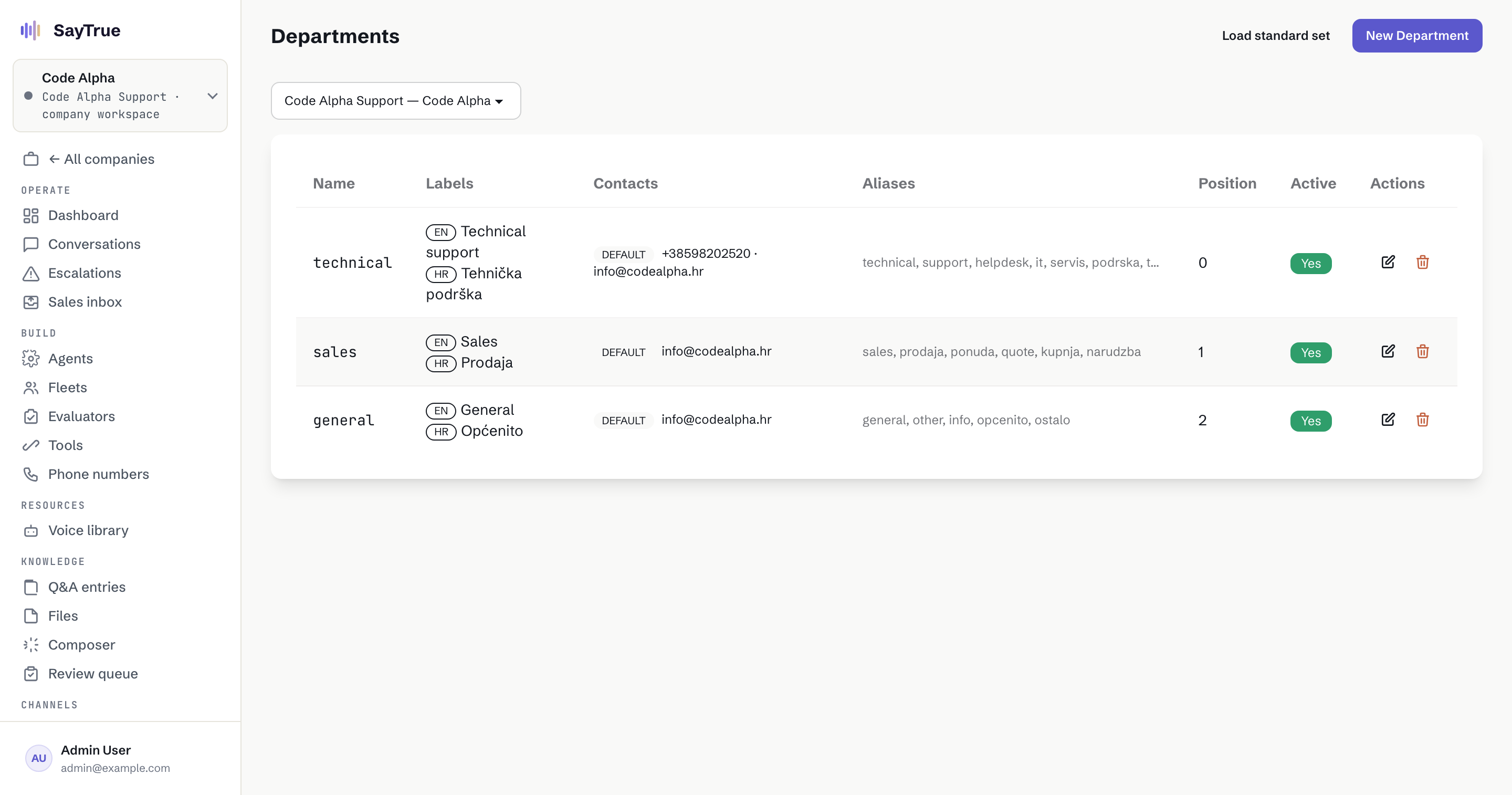
Clinic departments configured for scheduling and clinical handover
SCREEN 02 Scheduling, billing and clinical questions follow different routes. Demo data (Code Alpha) · Illustrative scenario

See this on your own phone line and website.

Book a demo

What buyers in this trade ask us

Is this compliant with patient privacy?

Conversations are retained per your configured period and purged nightly; access is limited to your staff behind tested tenant isolation; and the full subprocessor list with processing locations is part of the pre-signature documentation your DPO reviews. Medical advice is never generated — only your approved texts are spoken.

Can it give medical advice?

No, by design. It answers administrative and preparatory questions from entries you approved, and everything resembling a clinical question is classed for handover. The refusal is the feature — an improvising bot in a clinic is a liability, not a service.

Does it write into our scheduling system?

No — it captures structured appointment requests for your staff or transfers the call. Read-only connectors can let it state general availability where you expose it; the actual booking stays with your team and your system.

What about emergencies?

Emergency phrasing follows your protocol verbatim: the agent states your emergency guidance — 112, the on-call service, the nearest ER — as an approved entry, and never triages severity itself.

More depth in our guides →

Answers your customers can trust.

Grounded in your knowledge, honest about its limits, and handed to your team the moment it should be.