Solutions

Dispatchers should decide routes, not repeat tracking screens.

SayTrue answers approved logistics questions, reads permitted shipment status, and turns transport requests into structured work for the right desk.

Shipment status

Read the state the tracking system already knows

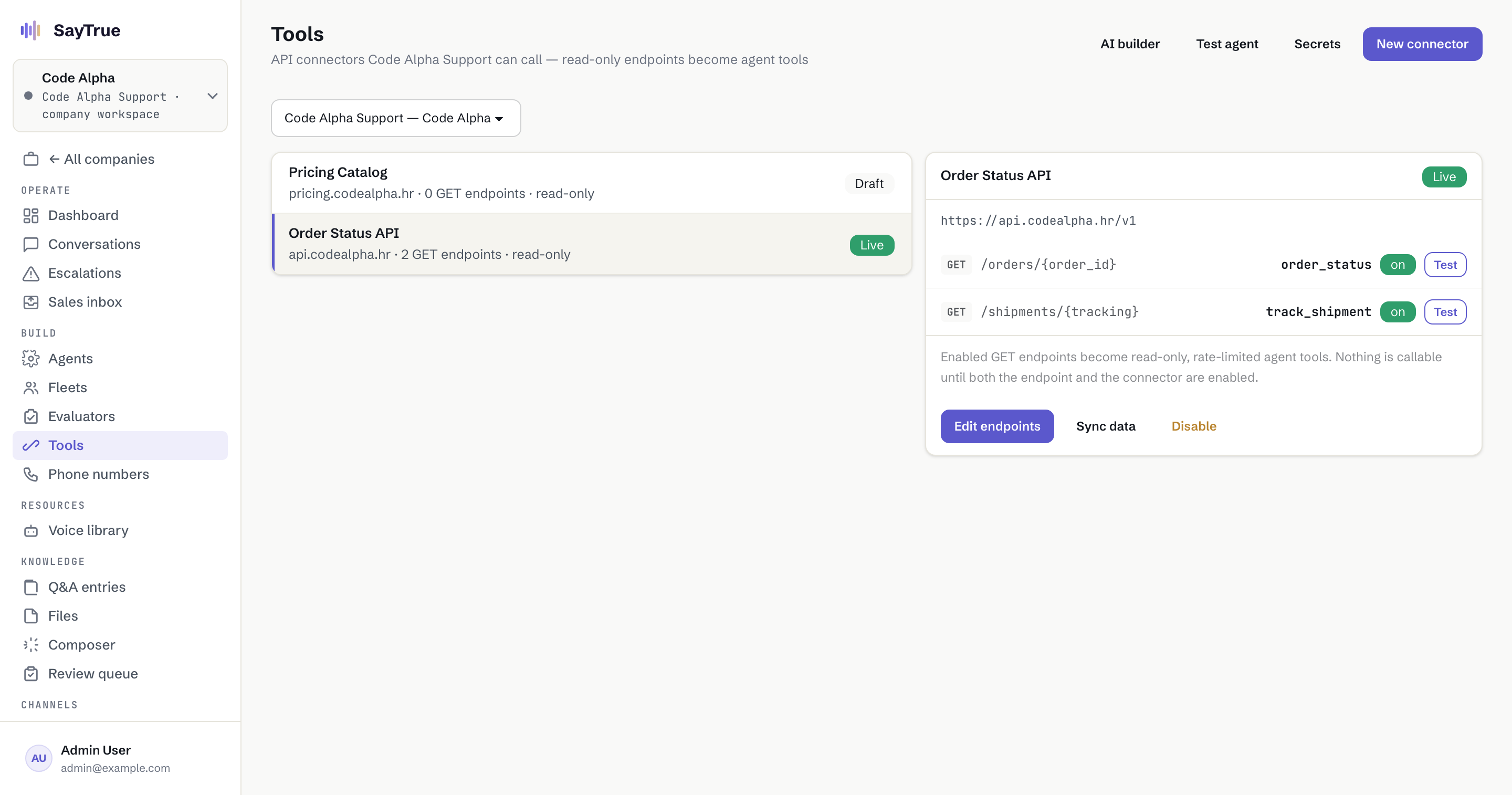
The caller supplies a shipment number; a read-only connector returns the approved status and the lookup remains visible in the conversation.

Transport requests

Route, cargo and dates captured before dispatch sees it

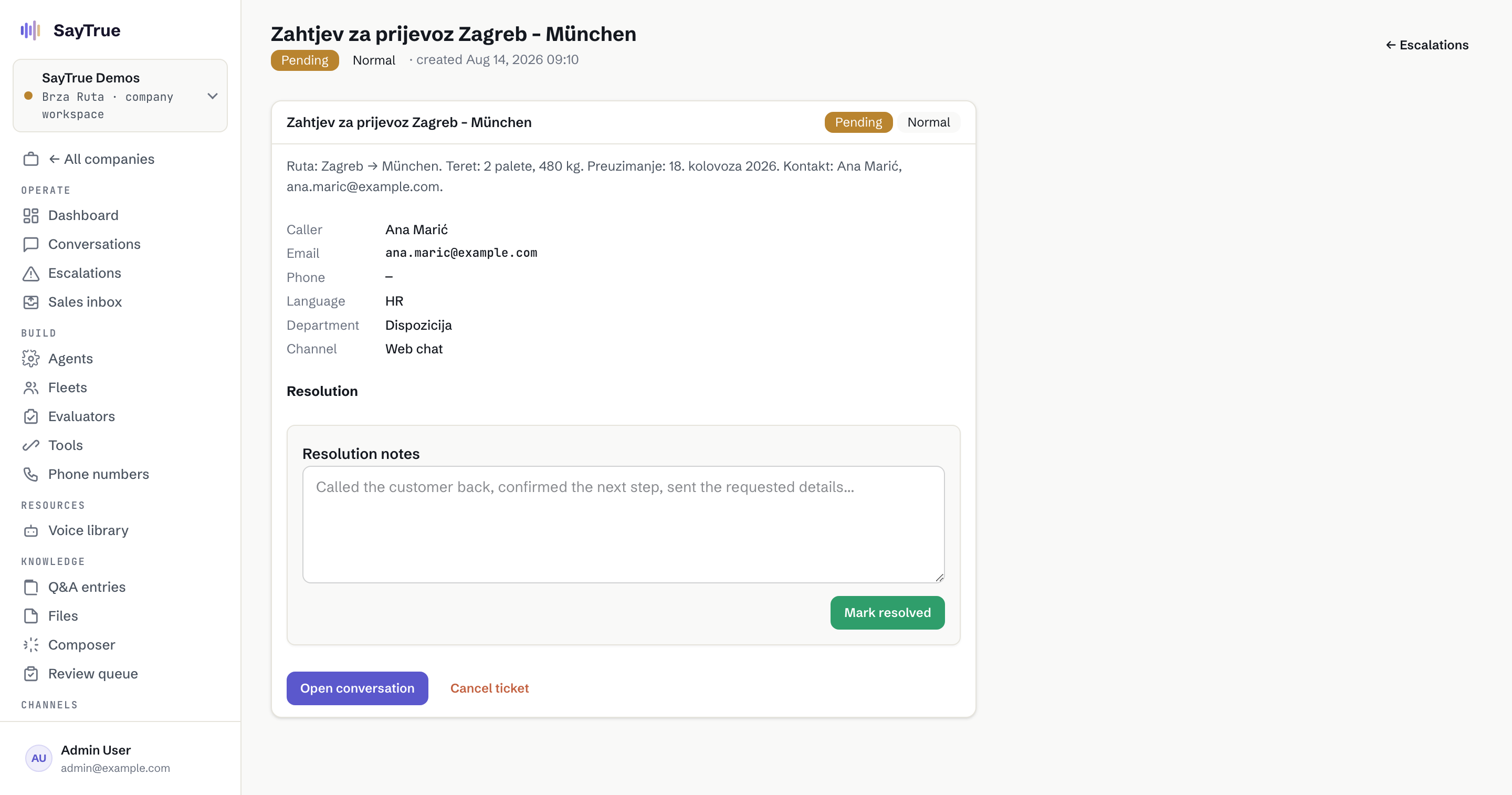
A quote or pickup inquiry becomes a structured ticket with the details dispatch needs, not a vague callback note.

After-hours intake

The night shift makes no morning promises

Approved facts are answered; new requests are recorded with contact details and queued for the staffed team.

Exception routing

Claims and urgent delays reach the right desk

Departments and working hours decide whether an exception transfers now or arrives as a complete request.

The story

The dispatcher's phone became a filter instead of an interruption.

A regional freight forwarder used one number for shipment status, new transport requests, billing questions and delayed drivers. Dispatchers looked away from route decisions to read tracking states aloud, while incomplete quote messages waited for someone to call back and ask for the missing cargo details.

SayTrue now reads only the shipment state the forwarder exposes, records the lookup in the transcript, and captures route, cargo, dates and contact for new requests. Claims and urgent exceptions follow department and working-hour rules. At night, the agent records what the staffed team can actually handle next.

Dispatch opens the day with complete requests rather than a list of numbers to call blindly. The tracking system remains read-only, quotations remain with a person, and every failed lookup or new exception is visible in the transcript for review before the next shift.
How the forwarder sets it up

  1. Write the recurring logistics answersCoverage areas, vehicle types, loading rules and document requirements become plain approved entries.
  2. Connect the tracking lookupA read-only connection to your tracking system answers status by shipment number and is logged on every use.
  3. Route the exceptionsDispatch, billing and claims collect different fields and follow their own transfer rules.
  4. Set staffed and on-call hoursThe agent knows when a live team exists and when to create a request instead.
  5. Make the test callTest a valid shipment, an unavailable lookup and an urgent exception before publishing.

Approved logistics knowledge and read-only status sit beside explicit exception routes.

Question The agent answers Autonomy
Do you cover routes to Germany? States the coverage and service types in the approved entry. answers alone
Where is my shipment? Looks up the permitted current status by shipment number and reads it back. answers alone
I need a price for pallets to Munich. Captures route, cargo, dates and contact for dispatch to quote. opens a ticket
The driver has not arrived. Collects the shipment context and routes the urgent exception according to hours. hands to a human
Which documents do I need for international transport? Answers from the approved document entry and sends case-specific questions to the team. answers alone
EXAMPLE KB Demo data (Code Alpha) · Illustrative scenario
Read-only logistics connectors configured in the SayTrue console
SCREEN 01 Only the approved lookups become available to the agent. Demo data (Code Alpha) · Illustrative scenario
A Brza Ruta transport-request ticket in the SayTrue console showing Zagreb to München, two pallets weighing 480 kg, pickup on 18 August 2026, Ana Marić's contact and the Dispozicija department
SCREEN 02 The route, cargo, pickup date and contact reach Dispatch together in one structured request. Demo data (SayTrue Demos) · Illustrative scenario

See this on your own phone line and website.

Book a demo

What buyers in this trade ask us

Can the agent change a shipment or route?

No. The connected lookups available to the agent are read-only. It may state the permitted current status and capture a requested change for your team, but dispatch remains the writer and decision-maker.

What if the tracking system is unavailable?

The agent says it cannot confirm the live status, records the shipment number and contact, and routes the request according to your fallback. It does not reuse an old state as if it were current.

Can different depots receive different requests?

Yes. Departments, aliases and language-specific contacts are configuration. The caller's route, cargo, dates and depot context travel with the ticket or transfer.

What happens outside dispatch hours?

The agent answers approved general questions and records the rest for the next staffed period. Only the urgent categories and on-call contacts you define may take a live handover.

More depth in our guides →

Answers your customers can trust.

Grounded in your knowledge, honest about its limits, and handed to your team the moment it should be.