It knows when to stop being an AI.
Three honest outcomes — answered, escalated, or refused — with live transfer to the right department, tickets that carry context, and working hours it actually respects.
Transfers that reach a person
Departments with per-language contacts, so the call lands with someone who can help — and outside working hours it never rings an empty office.
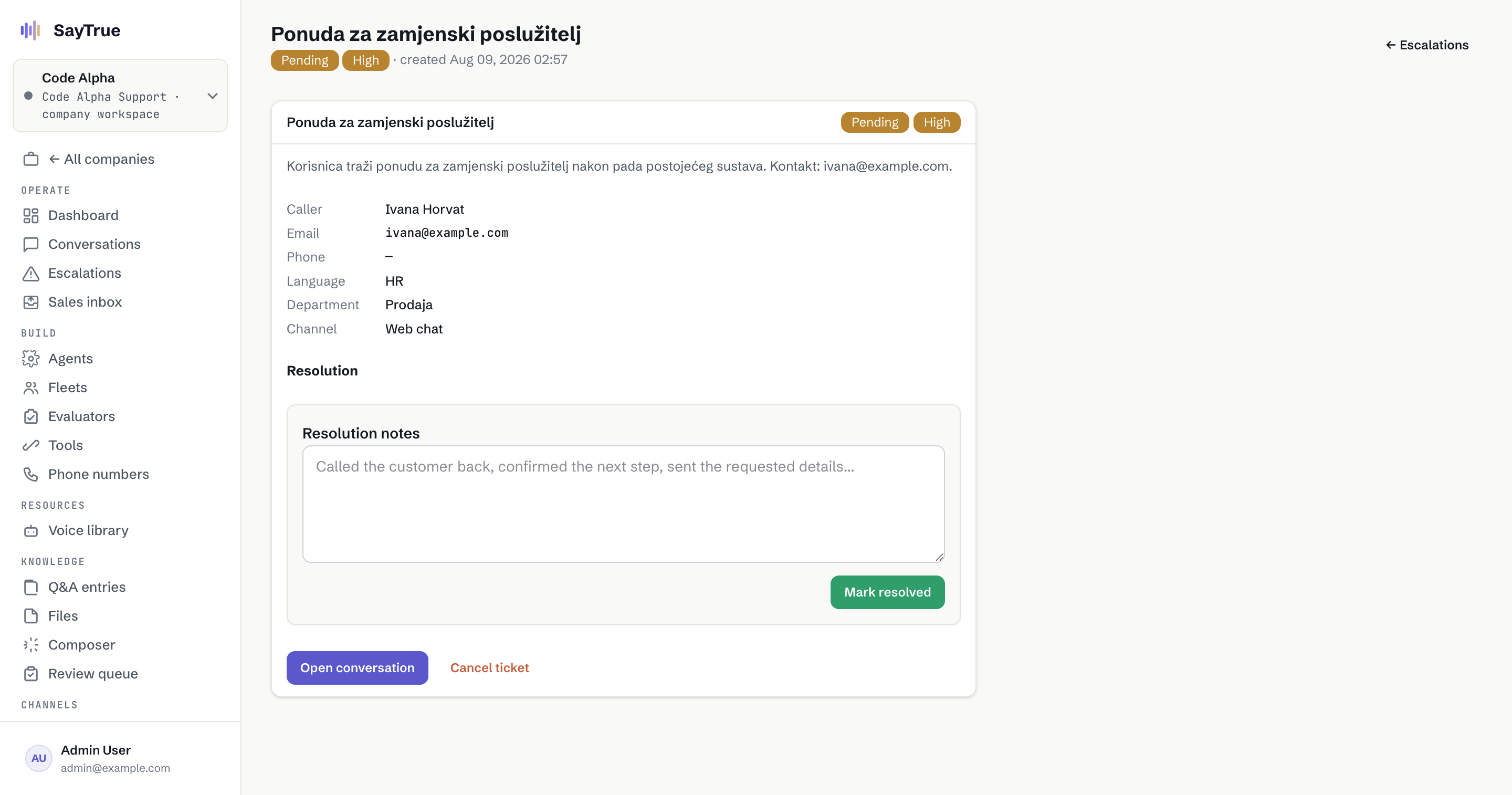
Tickets with the whole story
When nobody is available, the request becomes a ticket with the conversation summary and the sources used — not a voicemail nobody replays.
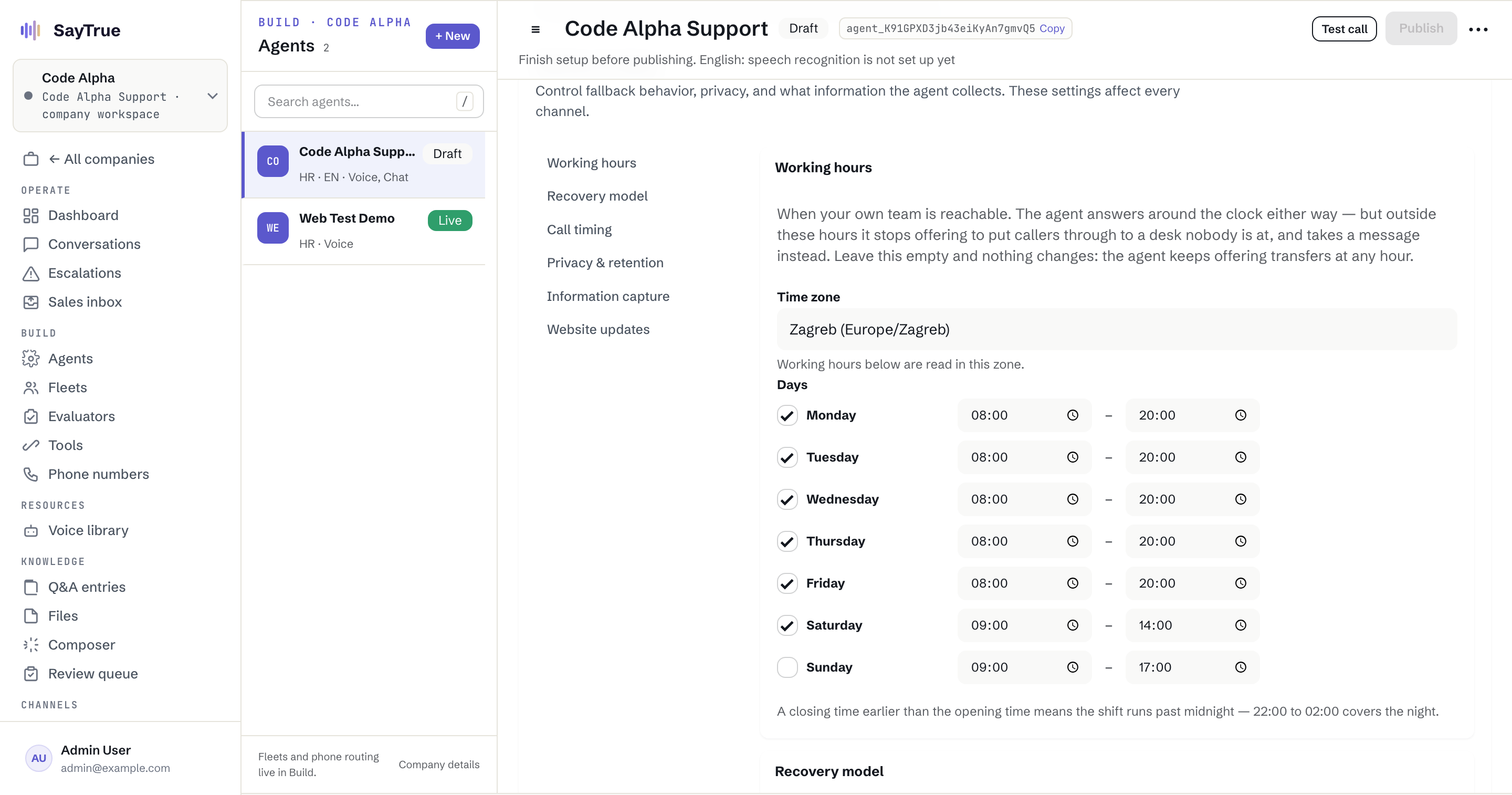
Working hours as a first-class fact
The agent knows when your people are reachable. At night it says so, takes the message, and tells the caller when you open — no false promises.
From the console
Questions buyers actually ask
What exactly happens when the agent gives up?
It depends on what you configured and what the clock says. During working hours: a live transfer to the department that owns the topic, in the caller's language. Outside them: an honest message, a recorded request, and no promise of a callback nobody committed to.
Who receives the tickets?
The departments you define, at the addresses you set — each ticket carries the conversation summary and the knowledge sources involved, so whoever picks it up starts informed instead of from zero.
Can it promise the customer a callback?
Only if that reflects reality. If no notification is configured, the agent's message doesn't pretend a colleague will follow up — it says the request is recorded and when the team is back. The promise and the plumbing always match.
How does it decide something is beyond it?
Three triggers: the knowledge entry itself is classed for handover, the answer isn't grounded in any approved source, or the customer asks for a human. Any of them ends in a transfer or a ticket — never in improvisation.
Answers your customers can trust.
Grounded in your knowledge, honest about its limits, and handed to your team the moment it should be.