Solutions

First snow forecast. Every phone in the shop rings at once.

Tire-change season, ‘is my car ready’, ‘how much for brakes’ — SayTrue absorbs the calls that pull mechanics from the lift, and captures what needs a person.

Tire shop AI

The October rush without the October chaos

Tire change requests captured with car, size and preferred slot — structured for your scheduler, while walk-in questions get instant answers.

Repair status

‘Is it ready?’ answered without a walk to the lift

Where you expose status read-only, the agent answers live; where you don't, it takes the callback request instead of guessing.

Service pricing

Price questions answered from your approved list

Oil change, brakes, diagnostics — list prices stated as written, 'depends on inspection' said when your list says so.

Working hours & logistics

Hours, location, courtesy car, waiting room

The practical questions answered at any hour — including the honest night answer with morning's first free slot policy.

The story

The first cold morning stopped owning the workshop phone.

A car service knew the pattern: weather changed, every driver called about tyres, warning lights and available times, and technicians paused paid work to repeat prices and preparation instructions. Status calls for cars already in the shop added another interruption.

The workshop approved its services and intake rules, then connected only the read-only status it wanted callers to see. SayTrue answers routine questions, captures a preferred service time for staff to confirm, and sends safety or diagnosis questions to the service adviser.

Each request reaches the workshop with the vehicle, requested work and contact already attached. The planner still owns capacity and confirmation, the technician still owns diagnosis, and the knowledge-gap list shows which recurring seasonal question should become an approved answer before the next rush.
How the workshop sets it up

  1. Describe services and price rulesTyres, maintenance, diagnostics and inspection preparation become approved entries with caveats.
  2. Choose the status sourceA read-only connector may expose an approved job status; it cannot alter the work order.
  3. Capture the vehicle correctlyRegistration, model, requested work and contact accompany every service request.
  4. Test a safety questionConfirm warning-light or roadworthiness advice reaches the service adviser instead of being invented.

The workshop chooses which service facts and job statuses callers may hear.

Question The agent answers Autonomy
Do you fit customer-supplied tyres? States the workshop's approved policy and any inspection requirement. answers alone
What should I bring for an inspection service? Lists the documents and vehicle conditions in the approved entry. answers alone
I want a tyre-change time after work. Captures vehicle, preferred period and contact for staff to confirm. opens a ticket
Is my car ready? Reads the permitted current status from a connected read-only lookup. answers alone
Is it safe to drive with this warning light? Does not diagnose and routes the question to the service adviser. hands to a human
EXAMPLE KB Demo data (Code Alpha) · Illustrative scenario
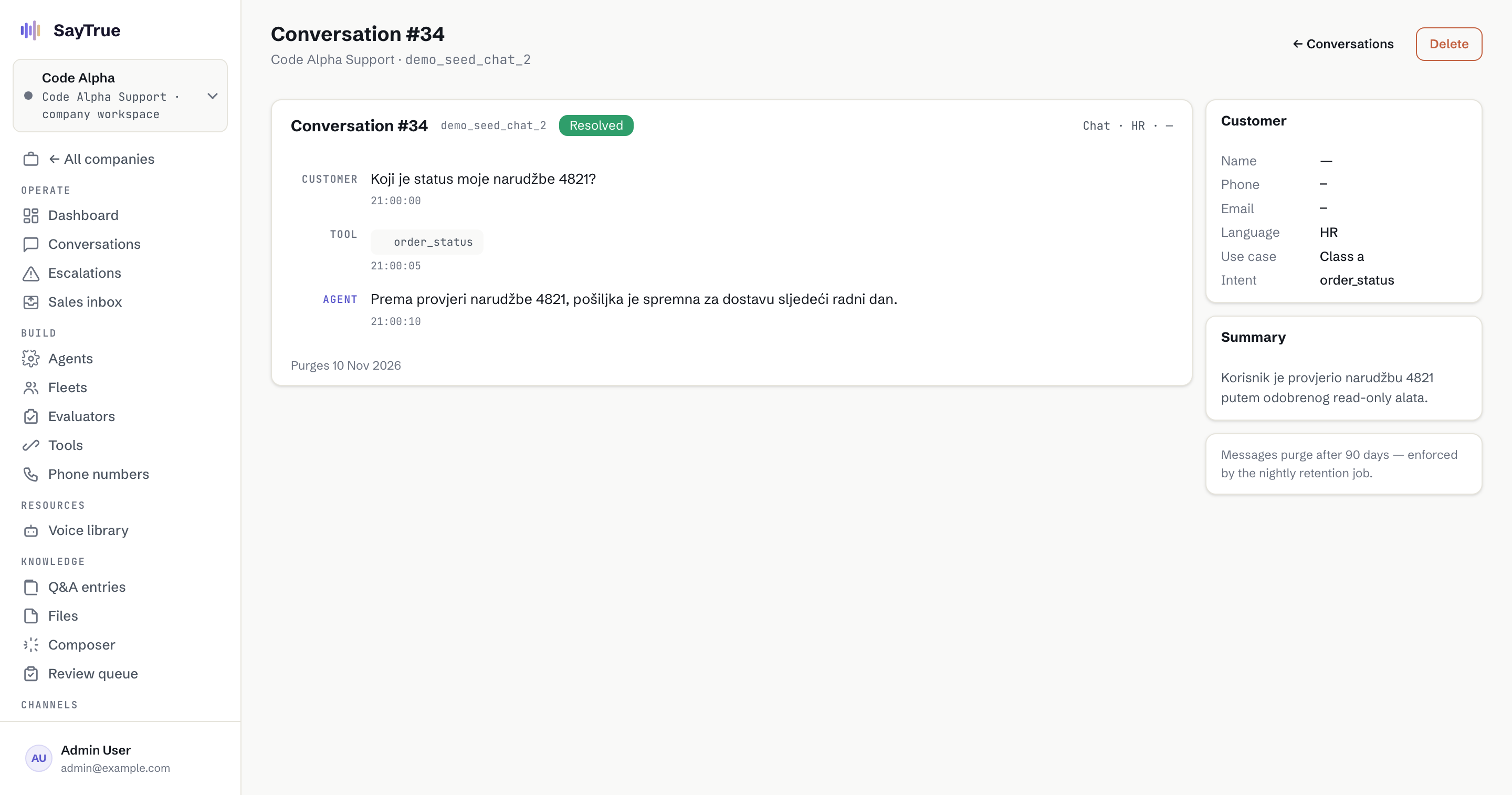
A read-only workshop status lookup recorded in SayTrue
SCREEN 01 The status answer shows the lookup that supplied it. Demo data (Code Alpha) · Illustrative scenario
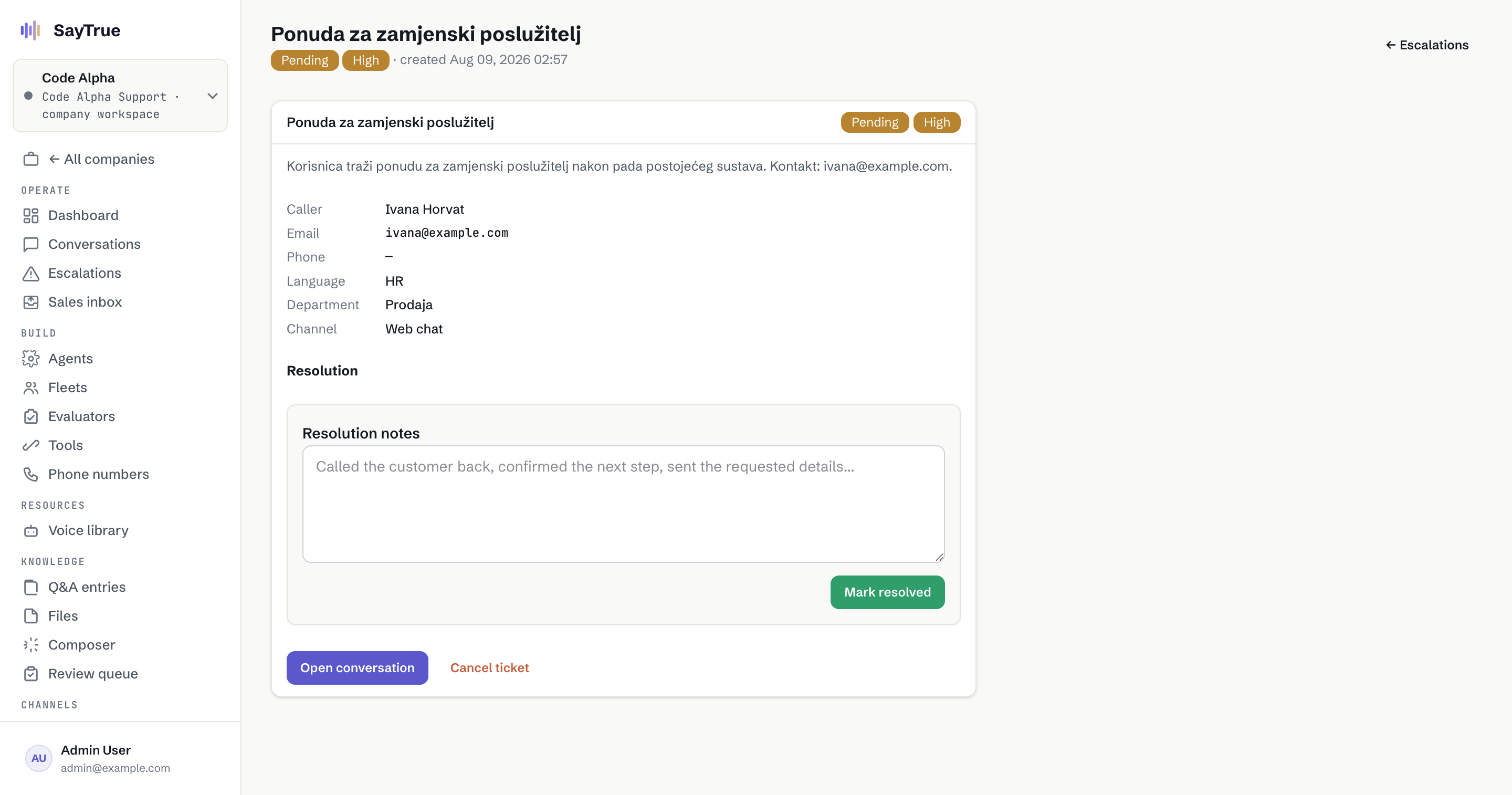
A handover ticket in the SayTrue console linking back to the conversation it came from
SCREEN 02 One click opens the original conversation — whoever picks up the ticket reads exactly what was said. Demo data (Code Alpha) · Illustrative scenario

See this on your own phone line and website.

Book a demo

What buyers in this trade ask us

Can it see our repair statuses?

If your shop software exposes them read-only, a connector lets the agent answer live — with every lookup logged in the transcript. If not, the agent records a callback request rather than inventing a status. Bring your software's name to the demo; we'll say honestly which path applies.

How does the tire-season surge actually work?

Every call gets picked up; tire-change requests are captured with vehicle, tire size and preferred timing as structured tickets your scheduler works through in order. The surge becomes a queue you control instead of a phone you fear.

Do customers accept talking to an AI about their car?

The agent introduces itself honestly and handles the transactional half — hours, prices, requests, statuses. Anything diagnostic goes to a human by design. Judge acceptance by the demo call with your own scenarios.

Can it quote repair prices?

It quotes your approved list and refuses beyond it — a firm number for an unlisted job is exactly the kind of improvisation we built the agent to refuse. Unlisted jobs get 'depends on inspection' and a captured request.

More depth in our guides →

Answers your customers can trust.

Grounded in your knowledge, honest about its limits, and handed to your team the moment it should be.