Solutions

Every apartment guest asks the same five questions.

Where's the key box, how does the AC work, when is check-out, where to park, is the wifi password really that. SayTrue answers them so your phone stops.

Rental guest AI

Arrival logistics without the twenty calls

Key boxes, parking spots, floor, door codes described per property — as approved entries the agent serves at any hour, in the guest's language.

House rules

The rules, stated kindly and consistently

Quiet hours, pets, smoking, extra guests — answered the same way every time, without your tone depending on the hour.

Multi-property

Ten listings, one knowledge base

Per-property details live as structured entries; the guest asks about their apartment and gets their answer, not a generic one.

Owner's evenings

Off after 18:00, honestly

Working hours are a real setting: evening messages get answers where knowledge exists and a recorded request where it doesn't — with your morning promise kept realistic.

The story

The host stopped copying the key-box message into every thread.

A rental operator managed several apartments with different entrances, parking rules and appliance quirks. Guests asked at all hours, and a rushed reply for one property could easily be pasted into the conversation for another.

Each property now has its own approved entries. The agent identifies the stay, answers the relevant arrival and house questions, and opens a structured request for missing linen, damage or access trouble. Urgent categories follow the operator's handover rules; routine questions no longer pull the host out of the evening.

The operating team can see which property, guest and rule supported every answer. If a door code or appliance instruction changes, one approved entry changes the next conversation too. Anything property-specific that is still missing becomes visible instead of being answered from memory.
How the rental operator sets it up

  1. Create a property profileGive every unit its own arrival, parking, Wi-Fi, appliance and house-rule entries.
  2. Keep access details scopedExpose only the instructions appropriate to the guest and channel; sensitive details stay controlled.
  3. Route maintenance requestsDamage, missing items and lockouts collect the property, contact and exact problem before handover.
  4. Test similar property namesConfirm the agent asks which unit the guest means instead of selecting one by assumption.

Property-specific entries prevent a generic answer from becoming the wrong instruction.

Question The agent answers Autonomy
Where is the key box for Harbour Loft? Reads the arrival instruction attached to Harbour Loft, not another unit. answers alone
Which parking space belongs to us? Answers from the selected property's parking entry. answers alone
We are missing bed linen. Records the property, guest contact and missing item for the host. opens a ticket
The front-door lock will not open. Follows the configured access-emergency route and passes the transcript. hands to a human
Can we leave after the stated check-out time? States the policy and records a request when an exception needs approval. opens a ticket
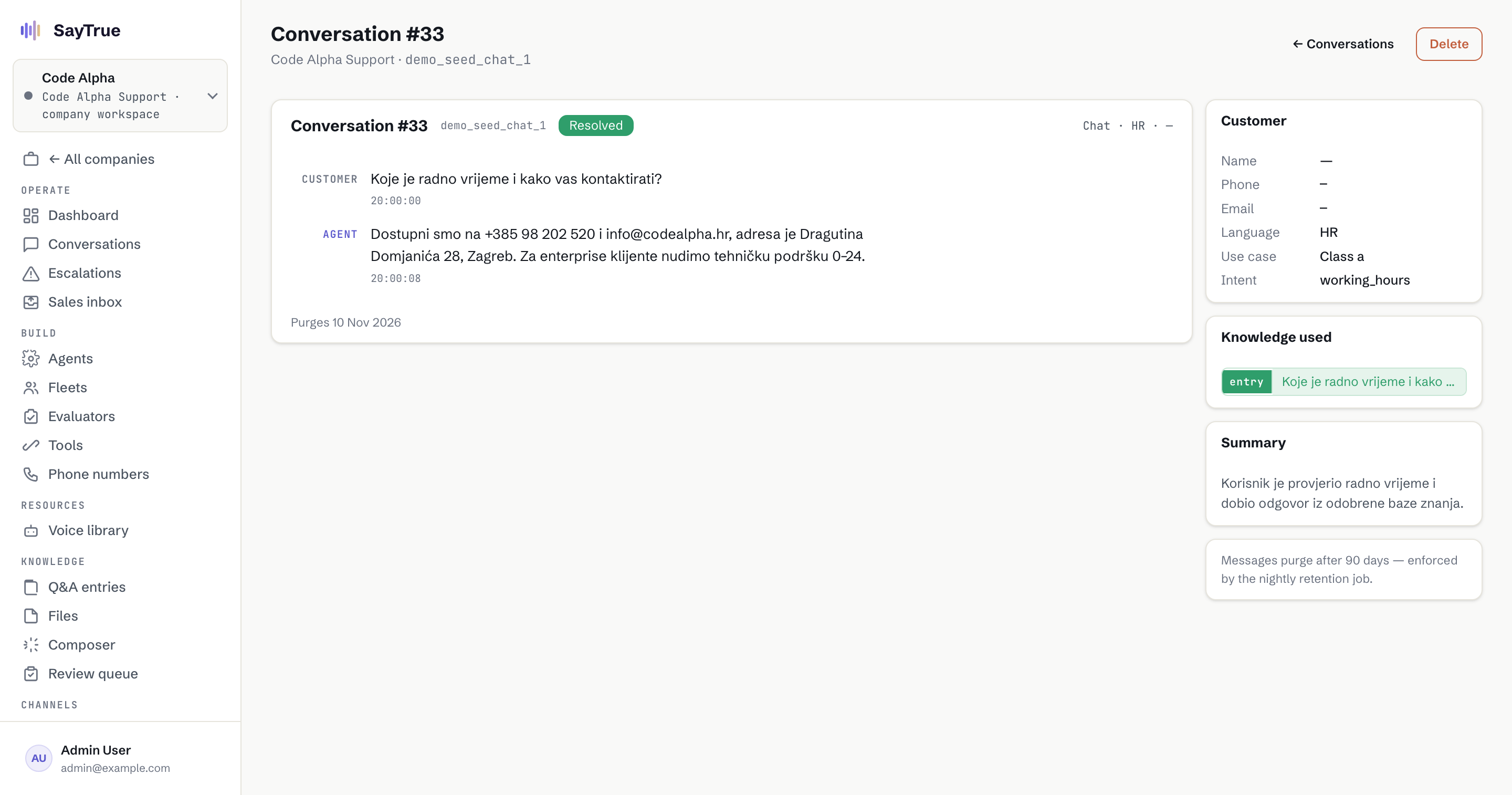
EXAMPLE KB Demo data (Code Alpha) · Illustrative scenario
A property-specific guest conversation in the SayTrue console
SCREEN 01 The property and request stay together in the transcript. Demo data (Code Alpha) · Illustrative scenario
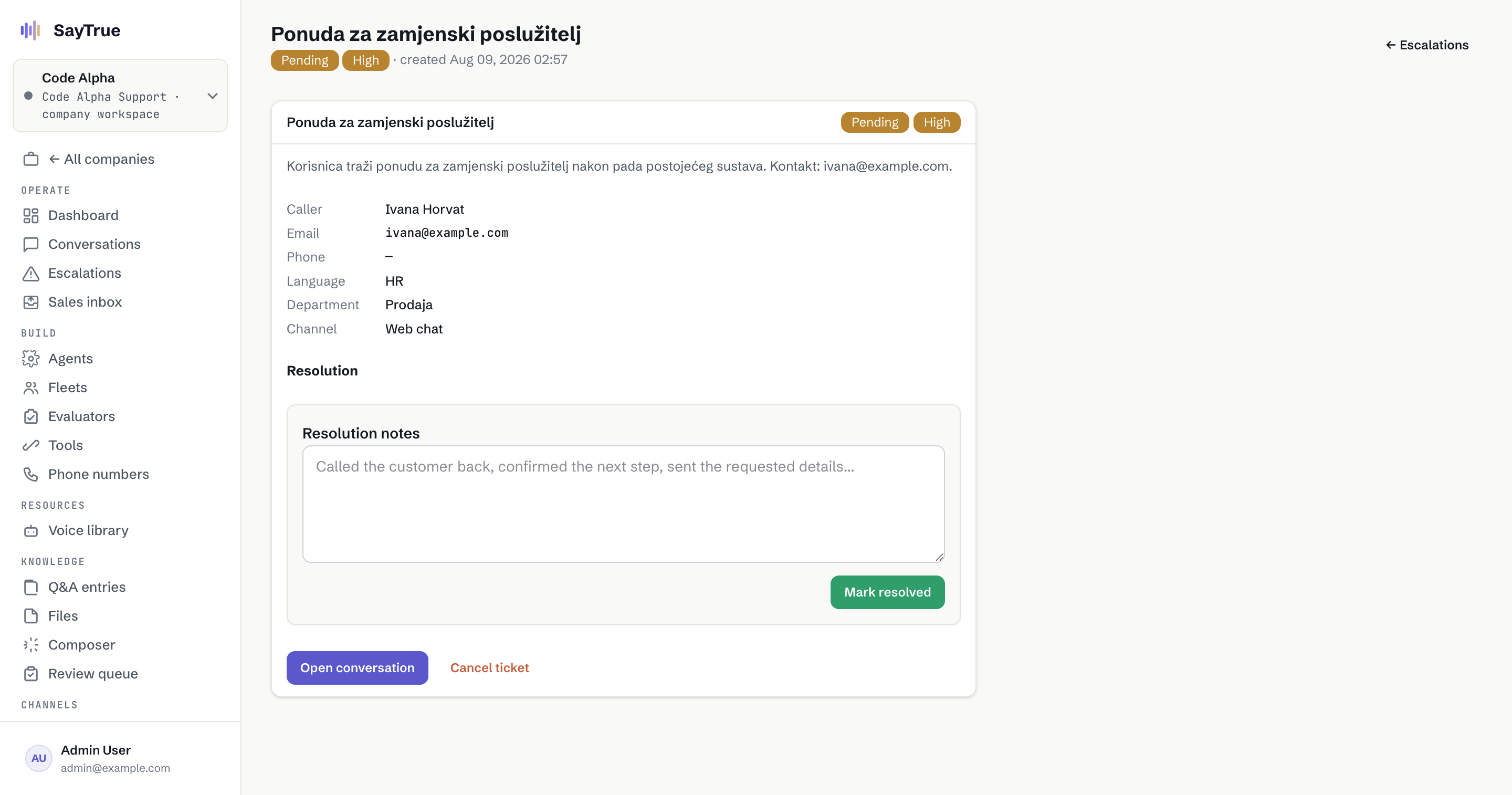
A handover ticket in the SayTrue console — who asked, how to reach them and the department the request routes to
SCREEN 02 A handoff arrives as a structured ticket — who asked, how to reach them and where it routes, with a person closing it out. Demo data (Code Alpha) · Illustrative scenario

See this on your own phone line and website.

Book a demo

What buyers in this trade ask us

Guests message through Booking and Airbnb — does this help?

SayTrue answers your phone, your web chat and your Meta inboxes; OTA message threads are not integrated today. Operators typically move guests to a direct channel at booking confirmation — a link to your chat or number — and let the agent carry it from there.

Can each apartment have its own instructions?

Yes — that's ordinary knowledge structure, not custom code. Entries carry per-property detail, and the agent answers for the property the guest asks about, including check-in specifics and appliance quirks.

What about damage reports or emergencies at night?

Urgent categories are classed for handover: the agent takes the report verbatim, opens a ticket with the property and contact, and — if you configured an emergency number — says exactly what happens next. It never promises a callback nobody will make.

How much of my time does this need weekly?

After setup, maintenance is editing entries when something changes and reading the gap report monthly. The console is built for non-technical operators — if you can edit a listing, you can maintain the knowledge base.

More depth in our guides →

Answers your customers can trust.

Grounded in your knowledge, honest about its limits, and handed to your team the moment it should be.